
Safety
Good overall
Hornsby combines a busy centre with quieter residential and bushland pockets. Safety and evening activity should be considered street by street.
North Shore · Upper North Shore
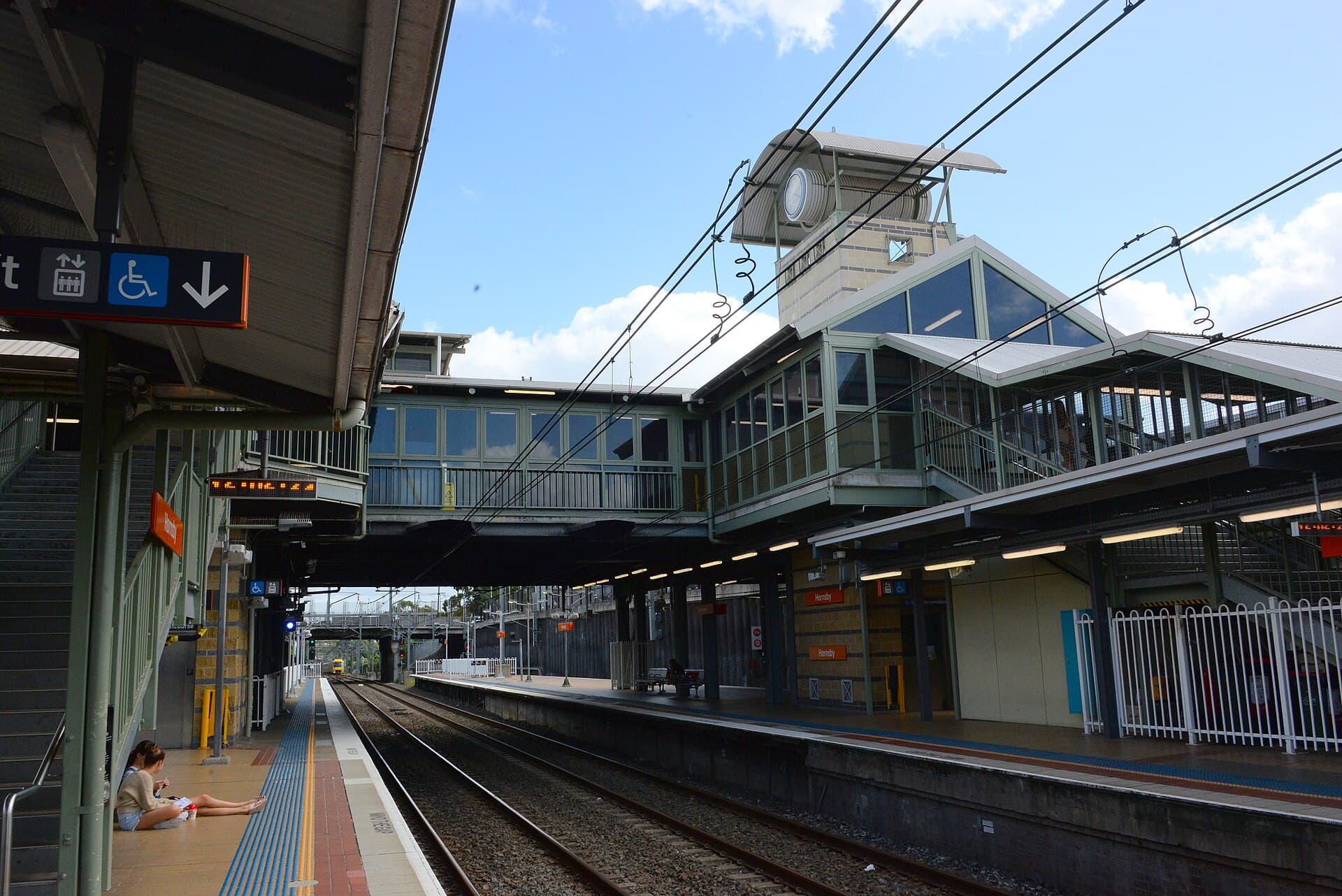
Hornsby gives buyers unusually broad choice: apartments beside a major transport and shopping centre, established family streets and homes that reach towards the bush.
Guide reviewed 2 August 2026
Hornsby in three numbers
ABS 2021 Census. Houses and apartments should be assessed as separate markets.
ABS 2021 Census for the Hornsby suburb and locality boundary.
The Hornsby transport-oriented development rezoning commenced in November 2024.
Hornsby property market
These figures change. The latest readings are in the HtAG and Microburbs reports available below.
Get the current Hornsby reports| Metric | What it tells you |
|---|---|
| Days on market | Is demand strengthening or are listings taking longer to sell? |
| Stock on market | How much choice do buyers have relative to the size of the suburb? |
| Auction clearance | How much competition is converting into a sale where auction volumes are meaningful? |
| Vendor discounting | Are buyers meeting asking prices or negotiating vendors down? |
| Vacancy rate | Is rental supply tight enough to support investor demand and rents? |
| Growth trend and confidence | Is price movement strengthening or slowing, and is the sample large enough to trust? |
Living in Hornsby
Good overall
Hornsby combines a busy centre with quieter residential and bushland pockets. Safety and evening activity should be considered street by street.
Excellent
Rail, buses, major shopping and health services make Hornsby one of the most self-contained centres on the Upper North Shore.
Very strong
Schools, parks and a broad housing mix suit families at different stages, from apartments near the centre to houses closer to bushland.
Strong
Hornsby has several public and selective-school options nearby. The correct public-school intake area depends on the property address.
Good
The town centre provides more dining and everyday variety than the smaller rail villages further south.
Pocket-dependent
Bushland-edge streets can feel removed from the centre, while rail, shopping and arterial positions carry more movement.
Strong
Sport, schools, cultural groups and a major town centre give Hornsby a broad community base.
Lifestyle categories informed by the public Microburbs Hornsby profile, reviewed 2 August 2026. Summaries are Ben Drayton’s interpretation and should be read alongside the official sources listed below.
Buying property in Hornsby
The ABS counted 5,120 occupied apartments and 3,056 occupied separate houses in Hornsby in 2021. That mix matters. Apartment buyers need to test strata records, building quality, future competing supply, aspect and the walk to the station. House buyers need to pay closer attention to the pocket, land, slope, road exposure, bushfire and the buyer pool at resale.
A single Hornsby median cannot tell you whether a specific property is scarce. Scarcity sits inside the segment and the immediate pocket.
The supplied pocket analysis below groups small clusters of homes and shows median house price alongside ten-year growth. In that snapshot, adjacent Hornsby pockets differ by more than 100 percentage points in recorded growth. It is not a forecast and it does not prove what happens next. It does show why postcode-level analysis is too coarse for a buying decision.
I use that data as a question generator. Why did one pocket attract deeper demand? Was it land, school access, traffic, topography, housing type or a small number of unusual sales? The map directs the investigation. It does not replace it.
Hornsby Shire Council says the state-led transport-oriented development rezoning took effect on 27 November 2024. The adopted masterplan contemplated substantial new housing and employment around the station and mall. That creates opportunity and uncertainty at the same time.
For an apartment buyer, the relevant questions are not simply whether more homes are coming. They are when, in what form, how close to the subject building and whether newer stock will compete with it at resale. For a house buyer near the centre, future density, construction, traffic and outlook need to be checked at parcel level.
Near the centre, check planning controls, nearby development applications, strata quality and future supply. Near bushland, check bushfire-prone land, drainage, slope, tree controls and insurance. Near arterial roads and the rail corridor, test noise at the times you will actually live there. In established house pockets, confirm easements, sewer lines and the practical buildability of the land before paying for renovation potential.
The principle is simple: the risks that matter are often visible on a map before they are visible in an inspection.
Public-school catchments
Depending on the street and year group, a Hornsby property may fall within one of these intake areas.
Catchments change and may divide a suburb street by street. Confirm the exact address in the NSW Public School Finder before relying on a school for a purchase decision. Selective entry and independent-school admission are separate processes.
Current third-party research
We can provide the latest available third-party Hornsby reports from HtAG and Microburbs.
The reports add current market indicators, demographic analysis, supply and demand measures, market-cycle information and forecast ranges that are not reproduced on this page.
Choose a time to discuss the Hornsby reports and what they mean for the property you are considering.
Book a 15-minute callFrequently asked
Both, but they are different decisions. In the 2021 Census, 59.1% of occupied private dwellings were apartments and 35.3% were separate houses. Apartment analysis turns on the building, strata and future supply. House analysis turns more on the pocket, land and environmental constraints.
Hornsby combines a dense town centre, established family streets, major transport corridors and bushland edges. Those conditions change within short distances, so two nearby homes can face different noise, slope, planning, school-access and resale considerations.
Check the applicable zoning and development controls, nearby proposals, likely construction impacts, outlook, traffic and competing apartment supply. For strata property, add the building's records, capital works plan and defect history.