
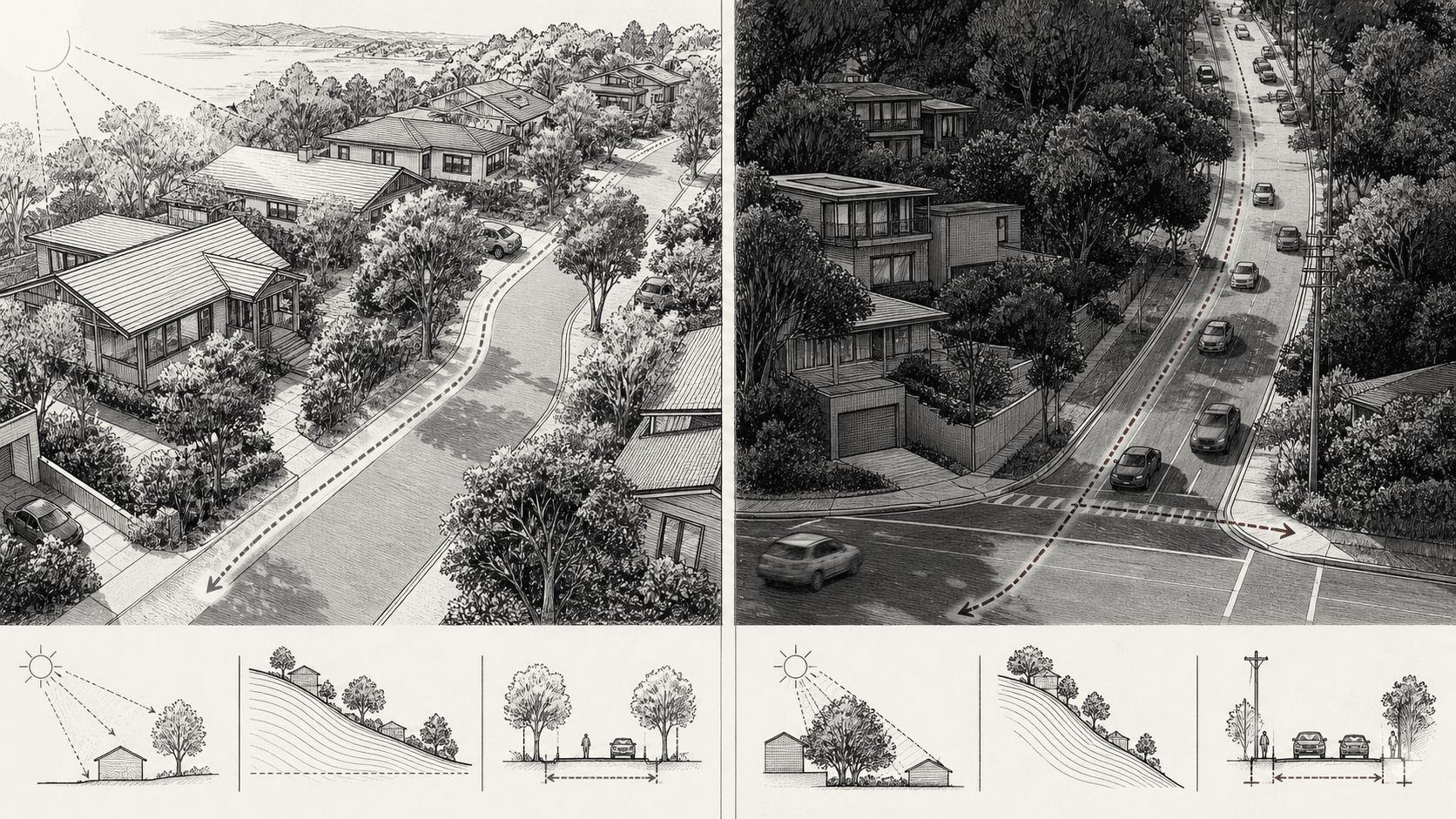
Two properties in the same suburb can serve different buyers.
The suburb name controls the search result. The street often controls the lived experience and the resale comparison.
Compare the route
Walk the route to the station, shops and school. Record grade, crossings, lighting, traffic and the time it takes at the hour the household will use it.
A straight-line distance cannot show a steep return walk, a difficult arterial crossing or an uncomfortable section after dark.
Listen at the right time
Inspect weekday morning and evening peaks. Return late enough to hear rail, aircraft, road and commercial activity when the home is quiet.
Check bedroom orientation and whether windows need to remain closed for comfort.
Read the land
Compare:
- slope and useful level area
- drainage and overland flow
- orientation and north access
- trees, rock and access
- easements and services
- the relationship between the house and garden
Title area is not the same as useful land.
Check planning and environmental context
Use the NSW Planning Portal and relevant council controls to identify zoning, heritage and surrounding development context. Check bushfire or flood information where relevant.
An overlay is a prompt for further work, not a verdict. Read the parcel documents and obtain the appropriate professional advice.
Compare buyer demand, not prestige
Ask which household will want each street next.
A quieter street with a practical school route may attract deeper family demand than a better-known address with traffic exposure. A walkable apartment pocket may serve a different buyer from a larger home requiring two cars.
The aim is not to declare one street universally better. It is to identify which compromises are being priced, which are permanent and which fit the brief.
The pocket-and-street method shows how this comparison sits inside the full search.
Official starting points
Confirm current information for the individual property before relying on it.