
04 · The assessment method
Campaign and price
What does the evidence support, and how is this campaign likely to move?
The property and the campaign are separate things. A sound property can still be a poor purchase at the wrong price or on unsuitable terms. Ben builds the value range first, then reads how the vendor, agent and genuine buyers are behaving around it.
What Ben examines
- Recent comparable sales, adjusted for land, condition, position, outlook and sale date
- Guide changes, method of sale, campaign timing and the agent's handling of comparable listings
- The vendor's stated preferences, including timing and settlement terms where they are known
- Contract requests, due-diligence activity and other signs of serious buyer participation
- The client's ceiling and acceptable terms, agreed before the pressure peaks
How to read it
Open-home attendance is not the same as the number of buyers capable of competing.
A guide movement can reflect genuine interest, vendor expectations or campaign strategy. It needs context.
The highest offer is not always the strongest if another offer better solves the vendor's timing or terms.
Campaign evidence
The campaign changes. The strategy should change with it.
Ben records how the guide moves, when comparable campaigns sell and how the selling agent’s prior results relate to their final guides.
None of those signals decides the offer alone. Together they help distinguish a campaign with genuine buyer pressure from one where the vendor or guide may need to adjust.
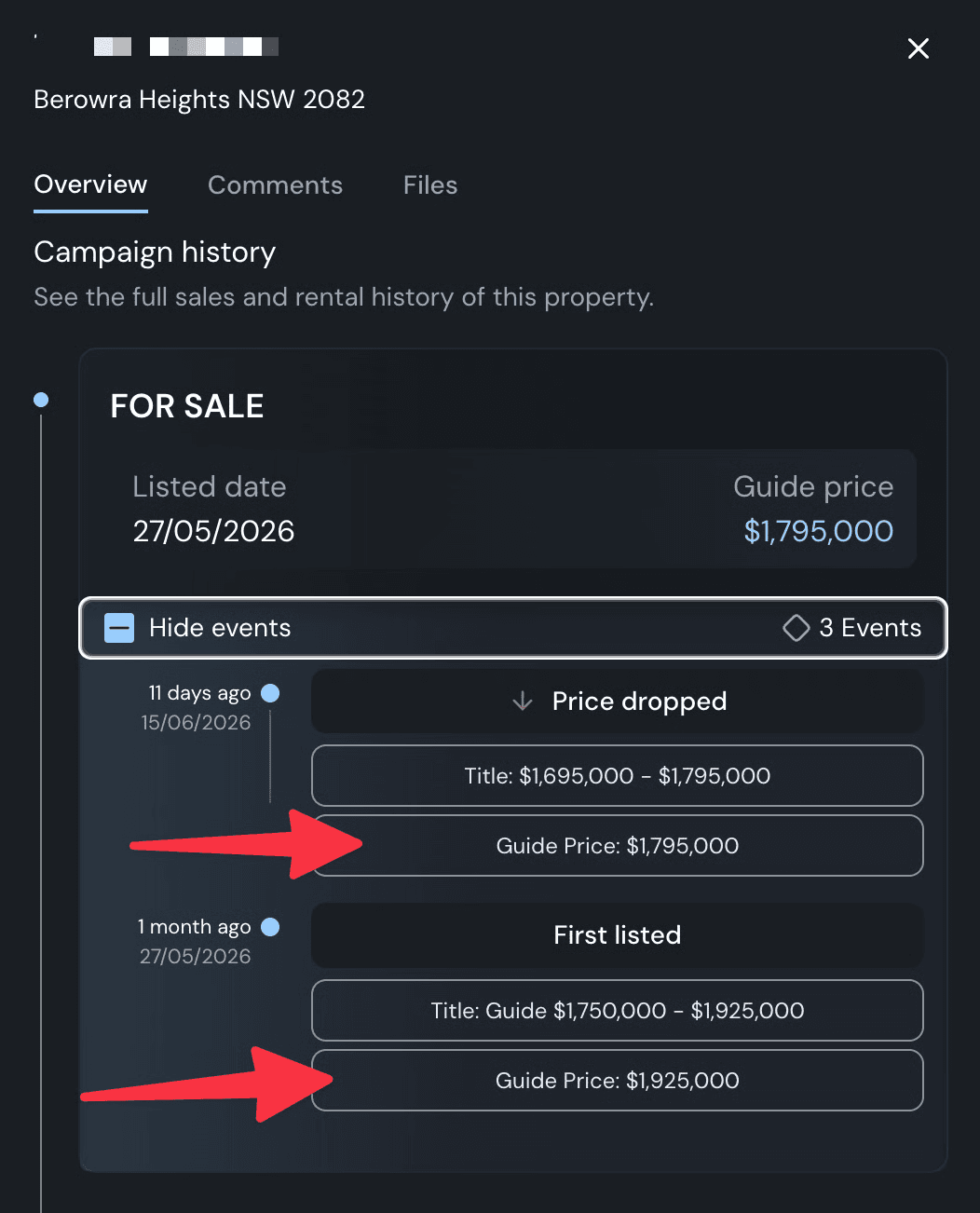
Read the guide through time
A change from the first guide can reveal how the campaign has met the market. It still needs to be tested against comparable sales and buyer activity.
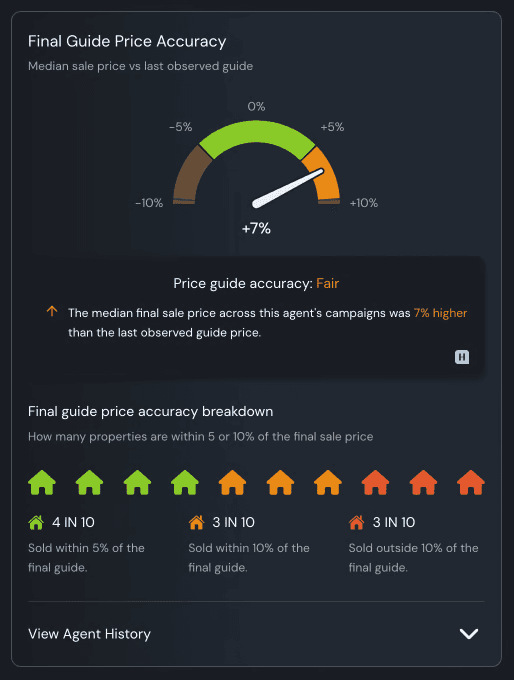
Compare guide and result
This example shows a median result 7% above the last observed guide, with material variation across the agent’s recorded campaigns.
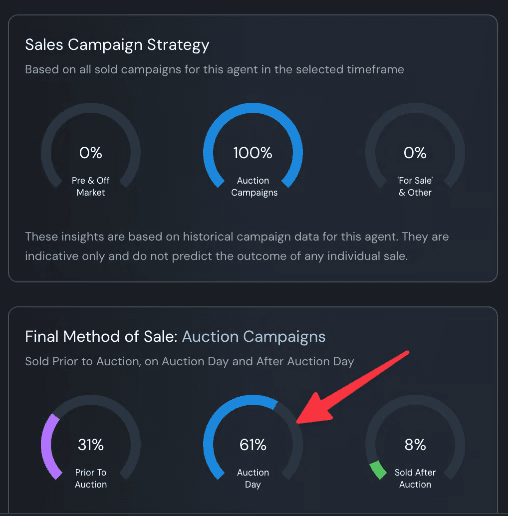
Understand how the agent’s campaigns conclude
In the selected historical period, 31% sold before auction, 61% on auction day and 8% after. That distribution informs timing; it does not predict the next sale.
Illustrative historical campaign extracts supplied July 2026. The relevant agent, timeframe, property type and sample size must be checked before the history is applied to a live campaign.
How this changes the offer
Negotiate the campaign in front of you.
An early offer can be useful when the property fits, the value is clear and the vendor prefers certainty. The same offer may simply give a strong auction campaign an early price signal.
If the guide has moved down, due-diligence activity is limited and comparable evidence sits below the vendor’s expectation, allowing the campaign to develop may preserve negotiating room.
Terms also carry information and value. Settlement timing, deposit, conditions and the buyer’s readiness can make an offer easier for a vendor to accept without changing the evidence-based ceiling.
Value first
Set the comparable-sales range before campaign pressure changes the conversation.
Read real activity
Separate open-home attention from contracts, due diligence and buyers able to proceed.
Choose the timing
Offer early, wait or prepare for auction according to the property and live evidence.
Hold the ceiling
Change the tactic when the evidence changes. Do not change the value because the room becomes emotional.
What this changes
The recommendation should state a defensible range, the evidence behind it and the acquisition strategy. If the campaign moves beyond that range, walking away is part of the process rather than a failed result.
The limit
The vendor's reserve, other buyers' ceilings and some motivations remain private. Campaign analysis improves the decision; it cannot remove uncertainty or guarantee an acquisition.
Continue through the method
Apply the method to a real property.
Bring the brief, shortlist or campaign you are weighing. Ben will explain which evidence matters, what remains uncertain and what the next decision requires.