
Safety
Urban
The commercial core, transport nodes and quieter residential streets have different patterns of activity, particularly outside office hours.
North Shore · Lower North Shore
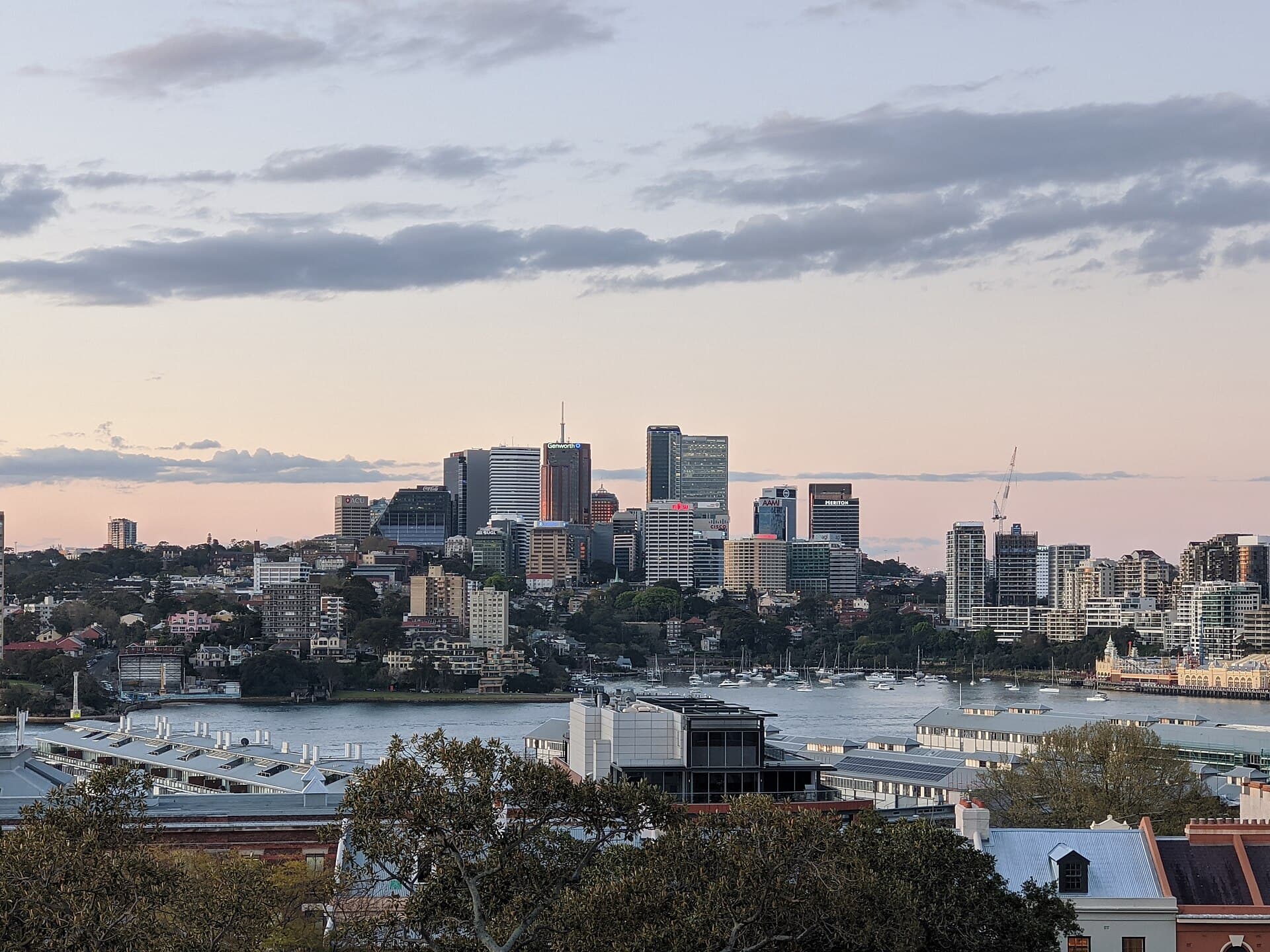
North Sydney offers a genuinely short city commute, strong transport and harbour-side residential pockets alongside the energy of a changing commercial centre.
Guide reviewed 2 August 2026
North Sydney in three numbers
ABS 2021 Census.
ABS 2021 Census.
Average recorded by the ABS in 2021.
North Sydney property market
These figures change. The latest readings are in the HtAG and Microburbs reports available below.
Get the current North Sydney reports| Metric | What it tells you |
|---|---|
| Days on market | Is demand strengthening or are listings taking longer to sell? |
| Stock on market | How much choice do buyers have relative to the size of the suburb? |
| Auction clearance | How much competition is converting into a sale where auction volumes are meaningful? |
| Vendor discounting | Are buyers meeting asking prices or negotiating vendors down? |
| Vacancy rate | Is rental supply tight enough to support investor demand and rents? |
| Growth trend and confidence | Is price movement strengthening or slowing, and is the sample large enough to trust? |
Living in North Sydney
Urban
The commercial core, transport nodes and quieter residential streets have different patterns of activity, particularly outside office hours.
Exceptional
Metro, rail, buses, walking access and proximity to the CBD give North Sydney unusually broad transport choice.
Good in the right pocket
Schools and parks support family life, but apartment layout, traffic and outdoor space require deliberate selection.
Very strong
The wider area has notable public and independent schools. Intake areas and selective entry are separate questions.
Improving
The daytime commercial offer is substantial, while nearby Crows Nest, Kirribilli and McMahons Point add evening choice.
Pocket-dependent
Heritage streets can feel removed from the commercial centre, while towers and transport corridors remain active.
Mixed but established
Long-term residential pockets sit beside a large commuter population, producing different local rhythms.
Lifestyle categories informed by the public Microburbs North Sydney profile, reviewed 2 August 2026. Summaries are Ben Drayton’s interpretation and should be read alongside the official sources listed below.
Buying property in North Sydney
A suburb median conceals floor height, outlook, aspect, internal light, parking, strata history and the amount of competing stock in the same building.
Compare within the building first where evidence exists, then widen carefully to buildings with a similar age, position and buyer profile.
The commercial centre continues to change. Check approved and proposed development around the property, not only what is visible at inspection.
Construction, future overshadowing and view loss can alter daily use and resale. A planning map is a prompt to read the underlying documents.
Metro, rail, bus and walking access are valuable, but the grade, road crossings and late-night route decide how useful that access feels.
Inspect road and construction noise at the times the household will actually be home.
Public-school catchments
Depending on the street and year group, a North Sydney property may fall within one of these intake areas.
Catchments change and may divide a suburb street by street. Confirm the exact address in the NSW Public School Finder before relying on a school for a purchase decision. Selective entry and independent-school admission are separate processes.
Current third-party research
We can provide the latest available third-party North Sydney reports from HtAG and Microburbs.
The reports add current market indicators, demographic analysis, supply and demand measures, market-cycle information and forecast ranges that are not reproduced on this page.
Choose a time to discuss the North Sydney reports and what they mean for the property you are considering.
Book a 15-minute callFrequently asked
No. building age, height, outlook, heritage streets and proximity to the commercial centre create different buyer pools within the suburb. Comparable sales should match the property type and immediate position, not the suburb name alone.
Check strata records, parking title, noise, development applications, overshadowing and the exact walking route. Then read the contract, building condition and campaign evidence for the individual property.
Start with the role each property needs to play. Then compare pocket and street, land, natural light, layout, constraints and recent genuinely comparable sales in that order.