
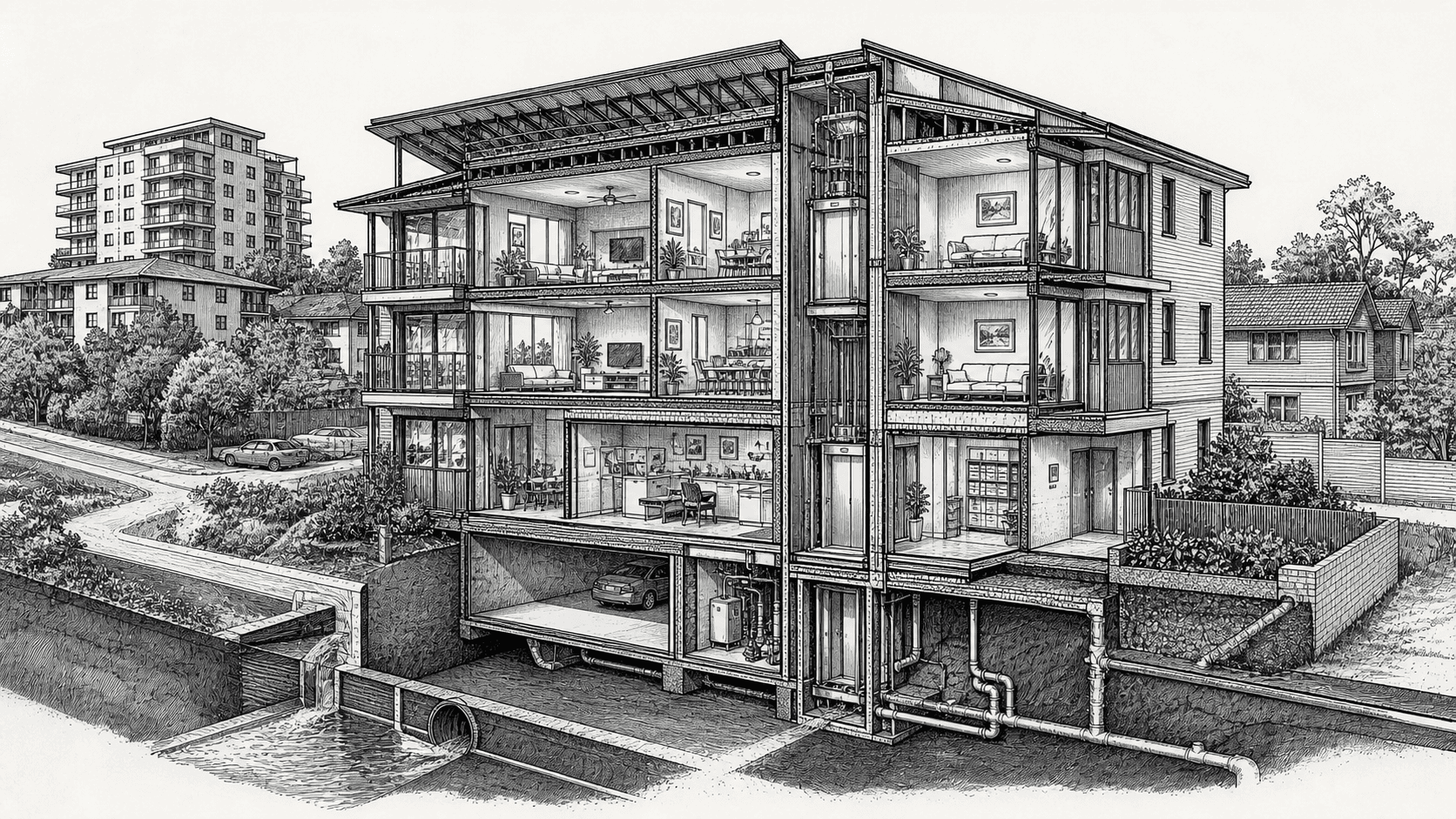
An apartment inspection shows the finishes and outlook. It does not show the financial and physical system underneath them.
Due diligence needs to assess the lot, the building and the surrounding supply.
Read the strata records
Review the records with the appropriate legal and strata professionals. The useful questions include:
- What defects or recurring maintenance issues appear in the minutes?
- Is the capital works plan credible?
- Are current levies adequate for known work?
- Have special levies been raised or discussed?
- Are there disputes, insurance issues or by-law problems?
- What proportion of owners are in arrears?
A low levy is not automatically good. It may mean the building is efficient, or that future work is underfunded.
Inspect the building, not only the apartment
Look at common areas, basement, roof, drainage, façade, windows, lifts and services. Check signs of water entry and repeated patch repairs.
For newer buildings, establish defect history and the status of any claims or remediation. For older buildings, understand which major components have already been replaced.
Assess the lot
Natural light, cross-ventilation, bedroom position, privacy, noise, parking title, storage and usable floorplan affect daily life and resale.
Confirm what is actually on title. A car space, storage area or courtyard shown during inspection may be common property, exclusive use or part of the lot. The distinction matters.
Check future competition
Use council and NSW planning sources to inspect nearby approvals and zoning. New supply can improve the local centre while changing views, sunlight, construction exposure and the number of similar apartments available when you sell.
Build building-specific comparable sales
Start with sales in the same building. Then widen to buildings with similar age, quality, position, parking, aspect and buyer profile.
Price per square metre can be a cross-check. It is not a substitute for understanding why one apartment is worth more.
Read the broader property due-diligence checklist and the 4Ls assessment framework before the campaign determines the timetable.
Sources and limits
This is general information. Contract, strata, building and financial questions require the appropriate qualified advisers for the property.