
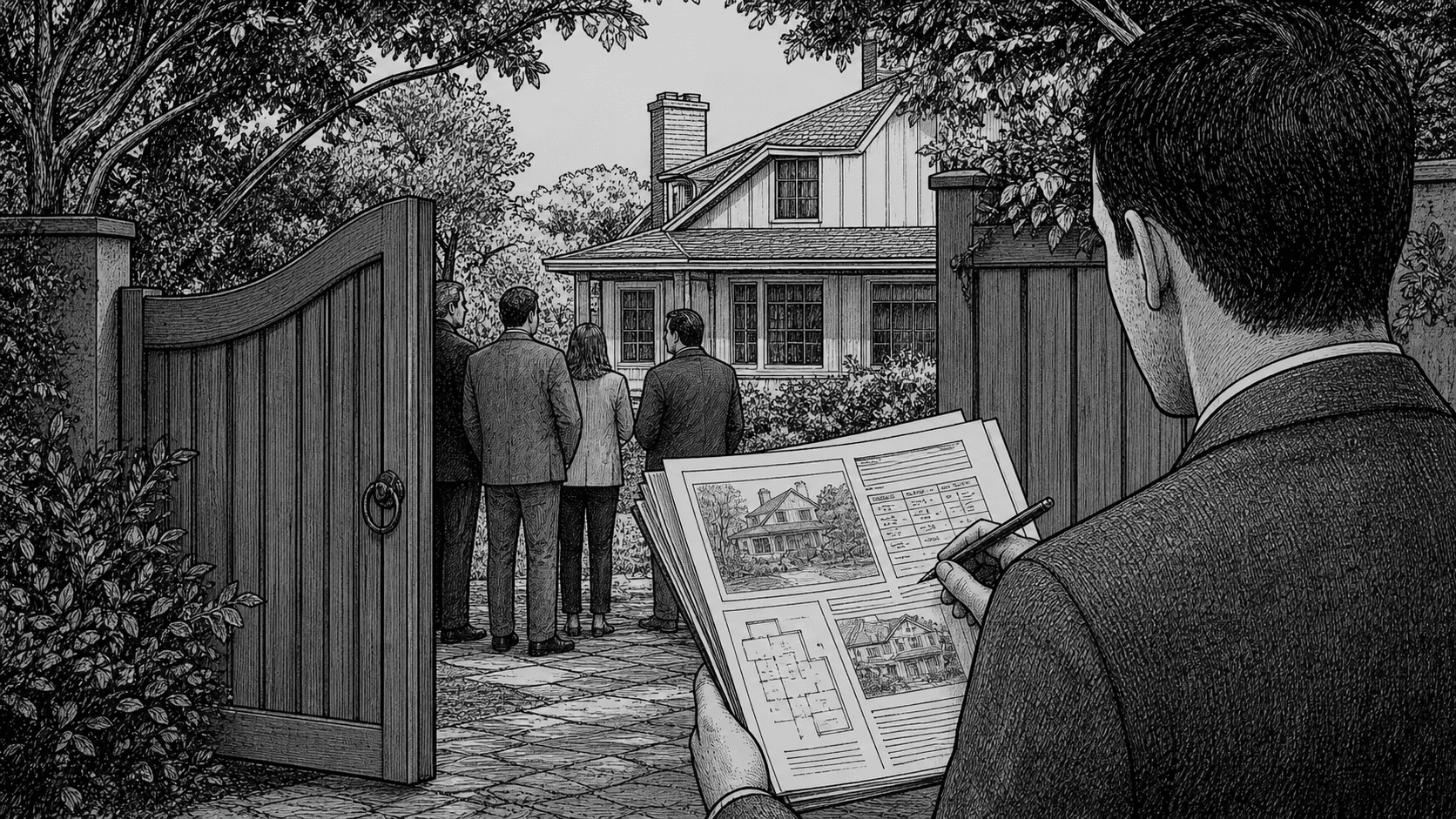
An off-market property is offered to selected buyers without a full public advertising campaign.
That is all the term proves.
It does not prove the home is scarce, underpriced or suitable for your brief. It does not prove the seller lacks alternatives. It does not remove the need for due diligence or comparable sales.
Why a seller may choose it
A seller may value privacy, speed or certainty. They may be testing demand before committing to campaign costs. The agent may be building early interest before a public launch.
Those situations create different negotiating conditions. Ask:
- Is the vendor committed to selling now?
- Is there a price that would secure the property before a campaign?
- Who else has inspected or requested the contract?
- When will the property be advertised if it does not sell?
- Which terms matter to the vendor other than price?
The answers may be strategic. Read them alongside the timeline and behaviour of the campaign.
Access is not an assessment
The property still needs to pass the same sequence:
- Does it fit the brief?
- Is the pocket and street right?
- Do land, natural light, location and layout support demand?
- What constraints sit in the contract, reports and planning context?
- What do recent genuinely comparable sales support?
Skipping that work because the opportunity feels exclusive is how access becomes expensive.
Build the value range independently
An off-market asking price is still part of a selling process.
Select comparable sales that match the land, property type, position, condition and timing. Adjust the evidence visibly. If the asking price sits beyond the defensible range, the fact that the property is unavailable to the wider market does not repair the value.
The comparable-sales method explains the sequence.
When off-market can be useful
Off-market access is useful when the brief is clear enough to recognise the right property quickly and the vendor values a term you can provide.
It is less useful when a buyer is hoping the lack of advertising will create a bargain.
The advantage is not secrecy. It is preparation: knowing the property fits, completing the checks and making a credible offer before a public campaign changes the buyer pool.
Method and limits
The reasons a vendor may choose an off-market process are possible campaign explanations, not facts about an individual vendor. Ask the selling agent and read the answer alongside the campaign behaviour. Off-market access does not guarantee exclusivity, value or a successful purchase.