
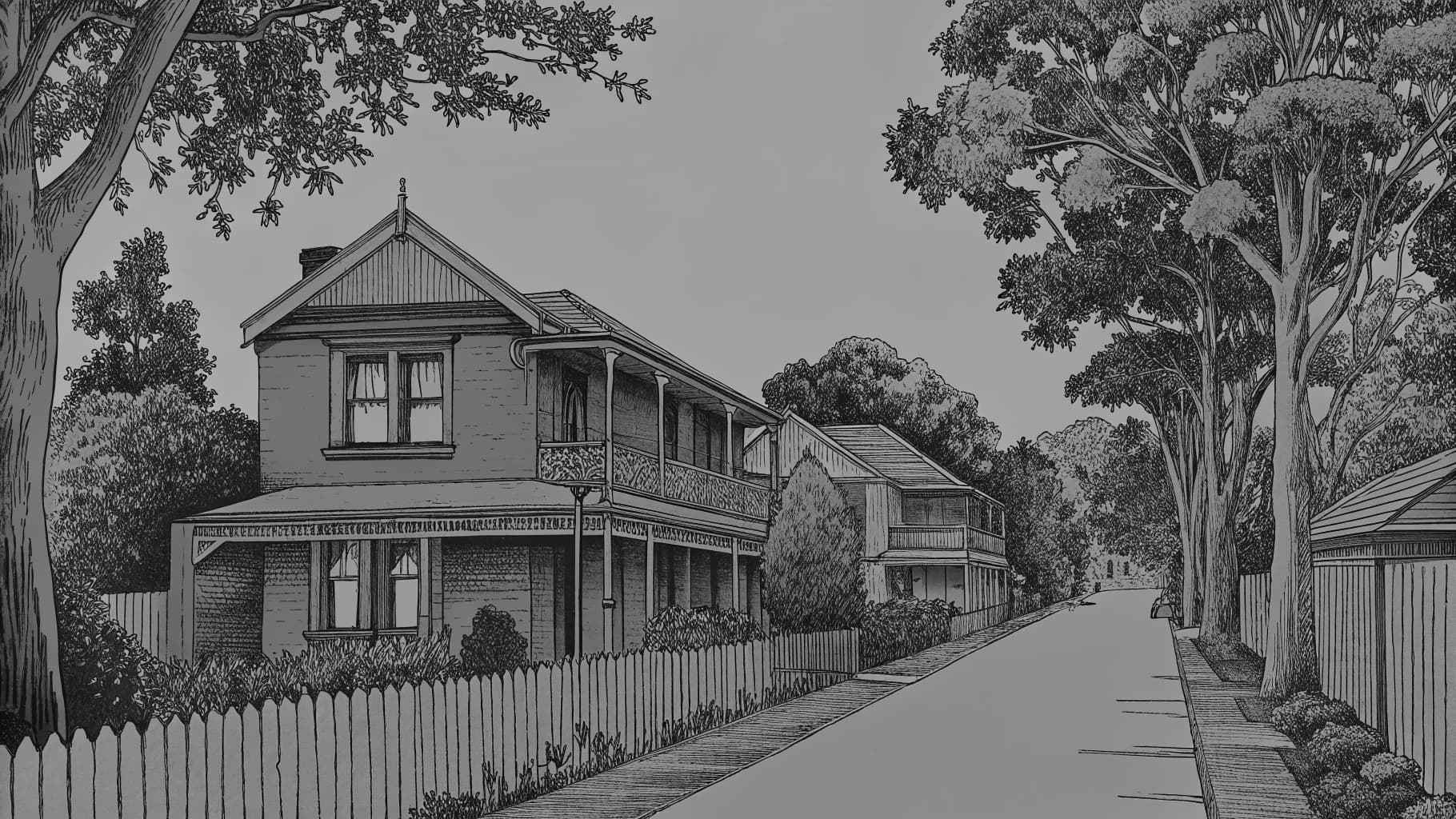
Two houses. Same street in Turramurra. One sells for more than the other, and the floor plans are almost identical.
Ask the agent and you will hear the usual reasons. Better light. A quieter end. Nicer kitchen. Sometimes those are real. But often the difference is invisible from the footpath: one front door sits inside a school catchment and the other sits just outside it.
The useful distinction is between a suburb assumption and an address-level check. Intake areas are drawn around specific addresses, not the suburb name used in a listing.
The catchment is a house-number fact, not a suburb one
A school zone is not a postcode. The NSW Department of Education draws an intake area around each school. Children of compulsory school age are entitled to enrol at their local school, while applications from outside the intake area are considered under that school's enrolment procedures and available capacity.
Those boundaries do not follow the tidy lines people imagine. They can divide streets and place nearby homes in different intake areas. They can also change, so the current address result matters more than a remembered boundary or an agent's description.
So "in the catchment" is not something you can tell from the suburb name on a listing. It is something you confirm at the address, on the day, for the school you actually care about.
Primary and secondary boundaries need separate checks
A buyer may care about a primary school, a secondary school or both. The relevant intake areas can differ, as can the year in which the household needs access.
There is no safe rule that one type of catchment always adds more value. The practical question is narrower: which school matters to this household, is this address currently inside its intake area, and is the buyer paying for a benefit they will use?
A catchment premium is a local comparison
Catchment access can affect demand, but it should not be treated as a standard percentage added to every home. Properties on either side of a boundary may also differ in traffic, walkability, land, housing type and street appeal. A suburb-level median cannot isolate those differences.
The defensible approach is to compare recent sales with similar land, dwelling and street position, then examine whether being inside the relevant intake area explains any remaining difference. Even then, the result describes those sales. It does not guarantee stronger future growth.
Two things can be true at once. A family can rationally pay more for a school benefit it expects to use, while another buyer can find better property value just outside the same boundary. The premium is personal as well as financial.
The trap in the listing
Listing copy is written to sell, and "in the catchment" is one of the most flattering three-word phrases available. It is also one of the least checked.
The problem is not usually dishonesty. It is imprecision. The property might be in the catchment for a primary school but not the high school the buyer is picturing. The boundary might run down the middle of that very street. The zone might be under review. Or the claim might quietly refer to last year's map.
Buying on the strength of that phrase is like ordering the second-cheapest wine on the list because it feels like a safe choice. It usually is not the choice you would make with the actual information in front of you.
The process that removes the guesswork
None of this is hard to check. It just has to be checked before you offer, not after.
Confirm the zone at the address, not the suburb, using the Department of Education's School Finder. Do it for the specific school that matters to you, primary and secondary separately, because the answer can differ. If the intake area is central to the purchase, confirm the enrolment position with the school before exchange.
That is the whole discipline. A catchment is worth paying for when it is verified and it matches your timeline. It is worth very little when it is assumed.
The bottom line
A school catchment can add to what a particular buyer will pay on the Upper North Shore. It remains an address-level fact, not a suburb-wide promise, and it is only useful once the current boundary and the household's enrolment needs have been confirmed.
Buy the verified zone, not the sentence in the ad.
Sources and limits
- NSW Department of Education School Finder, accessed 31 July 2026. Intake-area results should be checked for the specific address and school.
- NSW Department of Education: enrolment, accessed 31 July 2026. This explains local-school entitlement and the treatment of non-local applications.
Catchment boundaries and school enrolment settings can change. This article does not assign a universal price premium to a school intake area. Any price effect should be tested with current, property-level comparable sales.