
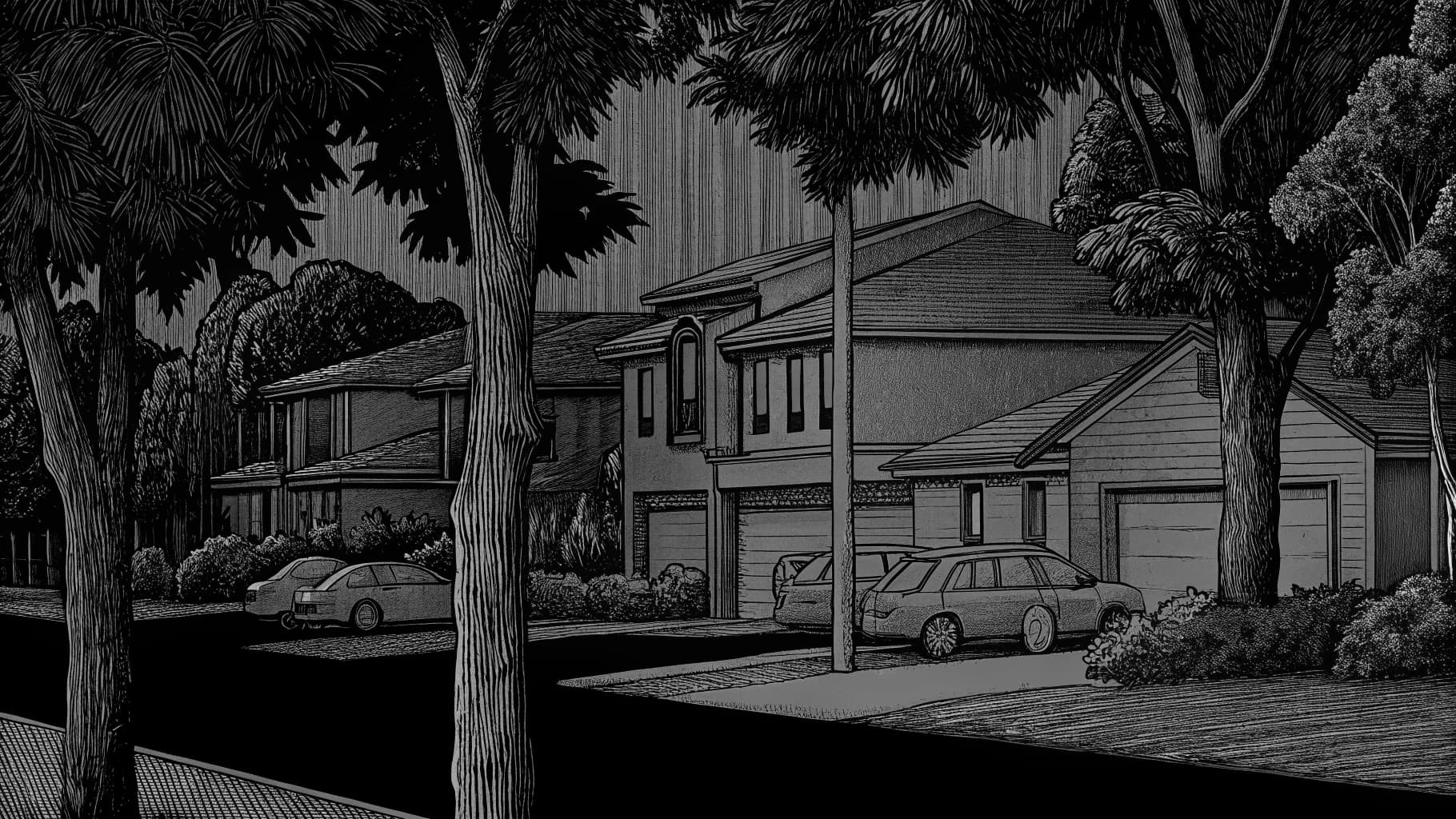
A suburb can fit the brief while an individual street does not.
The suburb tells you about broad access, housing mix and amenity. The street determines the route home, traffic exposure, topography, sunlight, parking and the properties surrounding the one you may buy. Those conditions shape daily use and remain visible when the property is sold again.
Start with the household's real routes
Distance is only the first measure.
Walk from the property to the station, bus stop, school, village or park the household expects to use. Note the grade, crossings, footpaths, lighting and traffic. Test the route at the relevant time rather than relying on a weekend inspection or a straight-line radius.
On the Upper North Shore, two homes with similar station distance can offer different walks because of slope, highway crossings or the side of the rail line. On the Lower North Shore, a short route to a village or ferry can involve a steep return. The better address depends on the household, not the number of metres alone.
Test road exposure from inside the property
A street label does not describe the actual noise.
Traffic can change by time of day, direction, elevation and the position of bedrooms and living areas. A rear-facing apartment may behave differently from the building's address. A house behind a local route may receive less noise than one near an intersection, braking point or bus stop.
Inspect with windows open. Visit during a weekday peak and when the household will be home. If traffic is part of the compromise, compare sales with similar exposure rather than borrowing evidence from a quieter street.
Read the land and topography together
The listing may state the block size. It does not show how much of the land is useful.
Fall, rock, drainage, trees, orientation, access and the position of the dwelling affect the garden, internal light and scope for future work. A larger block can provide less usable space than a smaller, better-arranged site.
Before paying for renovation or rebuilding potential, check the title, easements, planning controls and environmental mapping for the parcel. A concept should not be priced as an approval.
Check what may change around the property
The current outlook and streetscape are observations, not guarantees.
Review zoning, heritage or conservation controls, nearby development applications and vacant or underdeveloped sites. Change can improve amenity while also creating construction, traffic, overshadowing, view loss or competing supply.
The planning map is a starting point. Read the underlying documents and obtain planning advice where the potential change matters to the purchase.
Observe the immediate buyer market
Comparable sales should come from streets and properties that attract a similar buyer.
A recognised address may carry a premium. A quieter street nearby may offer better light, land or day-to-day access without the same name. Neither is automatically better value. The sales evidence needs to show what buyers paid for each set of compromises.
Look beyond bedrooms and bathrooms. Compare road exposure, walking route, aspect, usable land, housing quality and the surrounding streetscape. If those features differ materially, the sale may belong outside the range even when the postcode matches.
A practical street check
Before offering:
- walk the main daily routes at the times they will be used
- inspect traffic and parking during a weekday peak and an evening
- check sunlight and room orientation rather than relying on the agent's inspection time
- review the parcel's planning and environmental controls
- inspect nearby development applications and sites capable of change
- compare sales from streets with similar exposure, land and buyer appeal
One visit cannot reveal every condition. Weather, school terms, construction and traffic patterns change. The aim is not perfect knowledge. It is to replace the suburb assumption with enough street-level evidence to make the compromise visible.
Sources and limits
- NSW Planning Portal Spatial Viewer, accessed 3 August 2026. Address-level planning layers and links to applicable instruments.
- Relevant council planning registers and mapping should be checked for the individual address immediately before a purchase decision.
Street observations depend on the inspection date and time. Planning maps require interpretation and do not replace title, contract, survey, building, engineering or planning advice.